


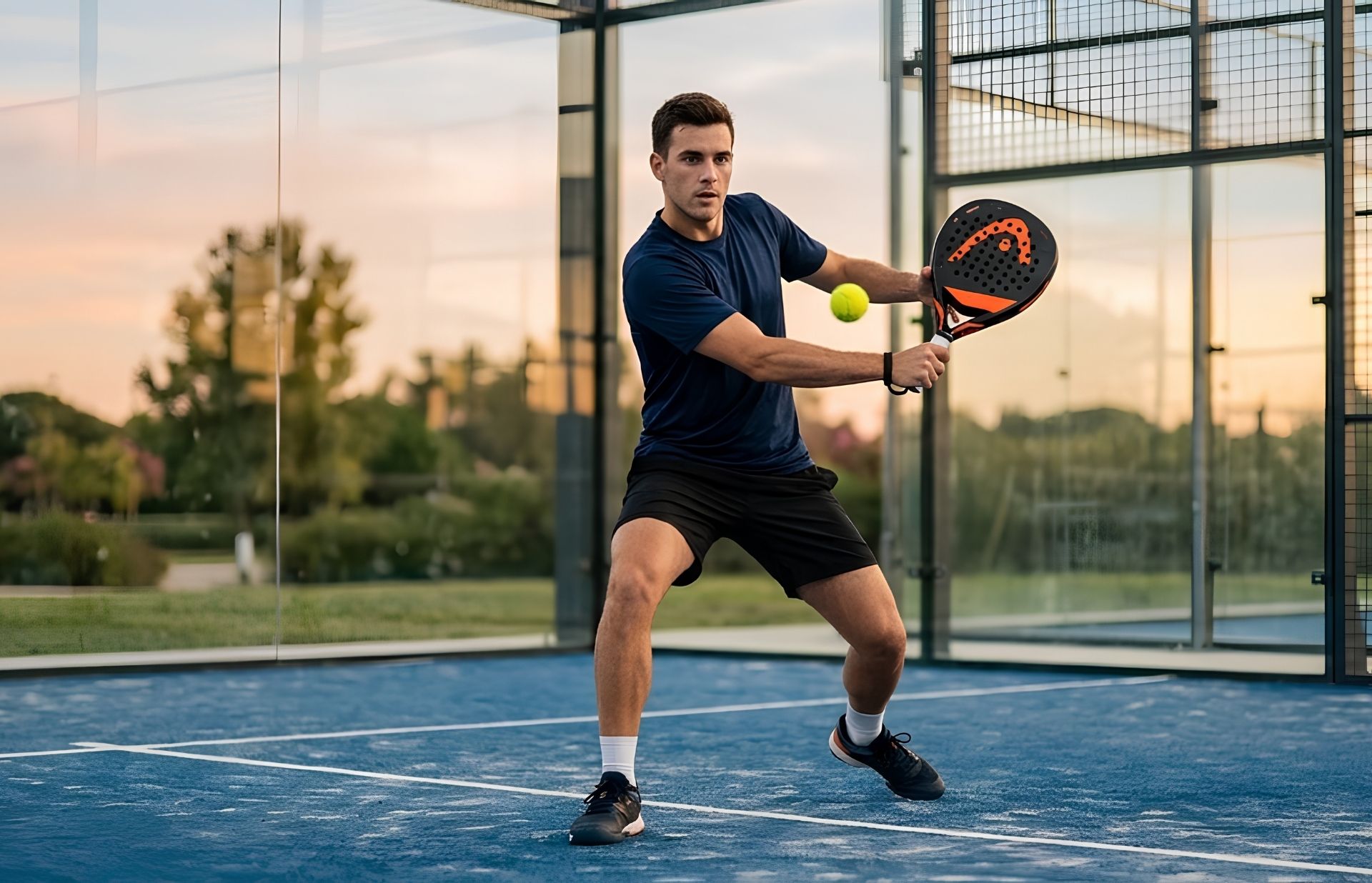
Learning to play padel seems simple at first: racket in hand, small court and soft ball. But the technique has more nuances than it may seem, and many players carry bad habits for years that slow down their progress. Detecting mistakes when learning padel technique in time is what allows you to stop getting stuck at the same level and start making the progress you are looking for. Mistakes when learning padel technique Most mistakes in padel do not come from a lack of strength or physical condition, but from gestures that have been incorrectly automated from the beginning. These are the most common ones: 1. Incorrect racket grip Many players hold the racket as if it were a tennis racket, with a grip that is too closed or too flat. This detail, which may seem minor, affects everything that comes afterwards: the ball's exit angle, the ability to create spin and comfort on high shots such as the volley or smash. A continental grip, neither too closed nor too open, allows you to move from forehand to backhand without changing your hand position each time, something that is difficult at first but ultimately saves reaction time. 2. Hitting only with the arm It is common to see beginners move only their arm when hitting, leaving the rest of their body still. The shot loses power and accuracy and, above all, becomes slower to anticipate. Correct technique involves rotating the torso and accompanying the shot with the legs, so that the arm finishes the movement rather than generating it entirely. Without this coordination, the player gets tired sooner and the ball loses consistency. 3. Not moving your feet Another very common mistake is staying static and waiting for the ball to arrive instead of moving towards it. Padel is played…
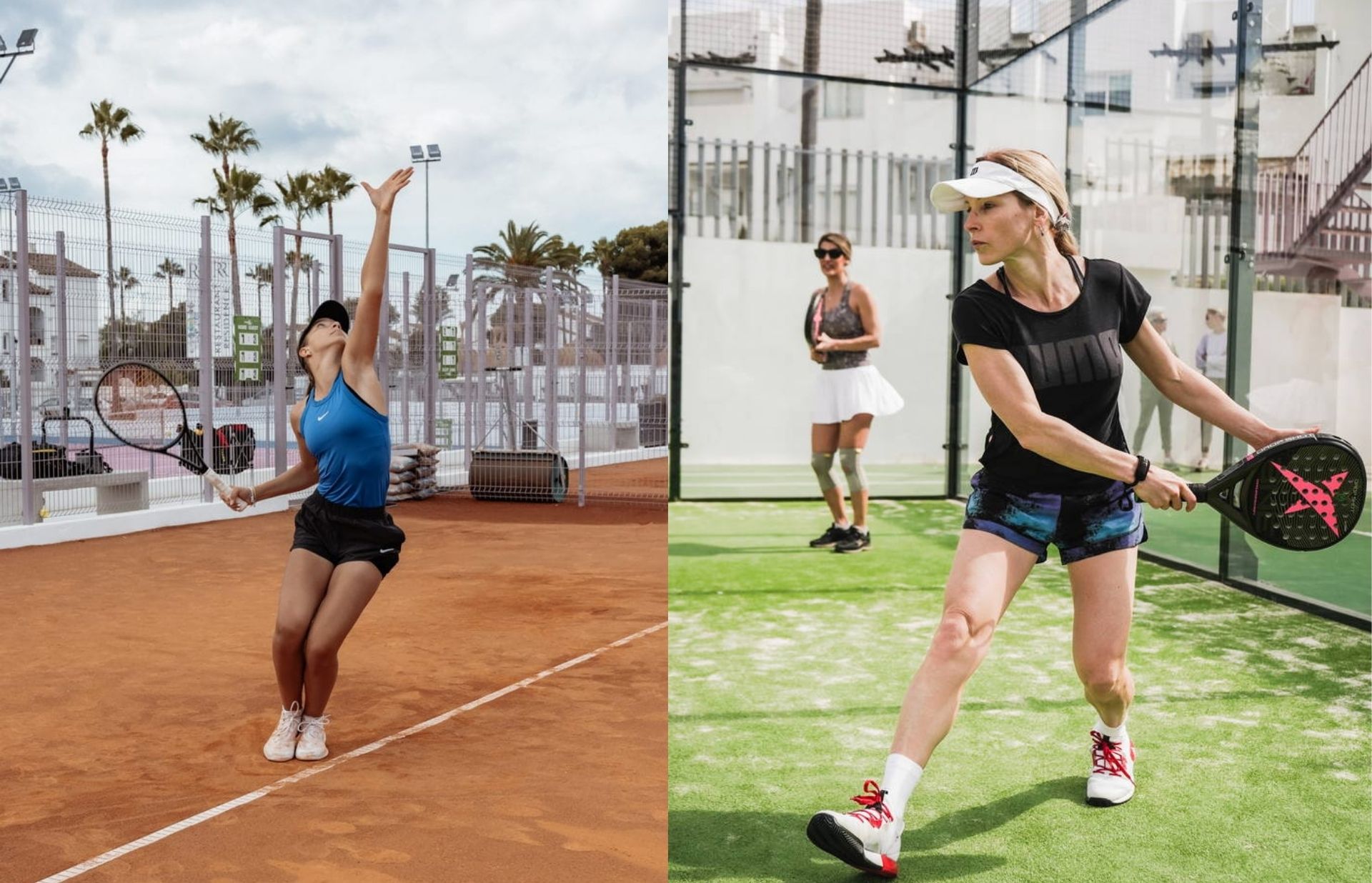
Choosing the right racket is a decision that directly affects both your performance on the court and the health of your joints. In both tennis and padel, the market offers a huge variety of options, which can be confusing if you do not know which factors to prioritise according to each player's profile. At RozaRossa Tennis Academy, today we want to share some tips to help you choose the right tennis or padel racket. Tips for choosing a tennis or padel racket Before looking at the brand or the latest popular model, there are several practical things you should consider to make the right choice. Be honest about your actual playing level It is very common to think we play better than we really do, and this often leads to choosing demanding rackets that punish every shot that is not perfectly executed. If you are still learning or improving your technique, you will benefit more from a racket that is more forgiving, allowing you to enjoy the game while improving instead of feeling frustrated with every point. Think about your physical condition first Your strength, endurance, and how well you cope with a long match matter more than any technical specification. If you have little strength in your arm, you will notice fatigue sooner with a heavy racket. If your arm is well trained, that same weight can help you hit with more power without putting in extra effort. Knowing your own limits is the first step before looking at any technical specifications. Be clear about your playing style Playing comfortably from the baseline is not the same as trying to finish points at the net. If you usually stay at the back of the court, you need help generating enough power to reach the other side. If you prefer…
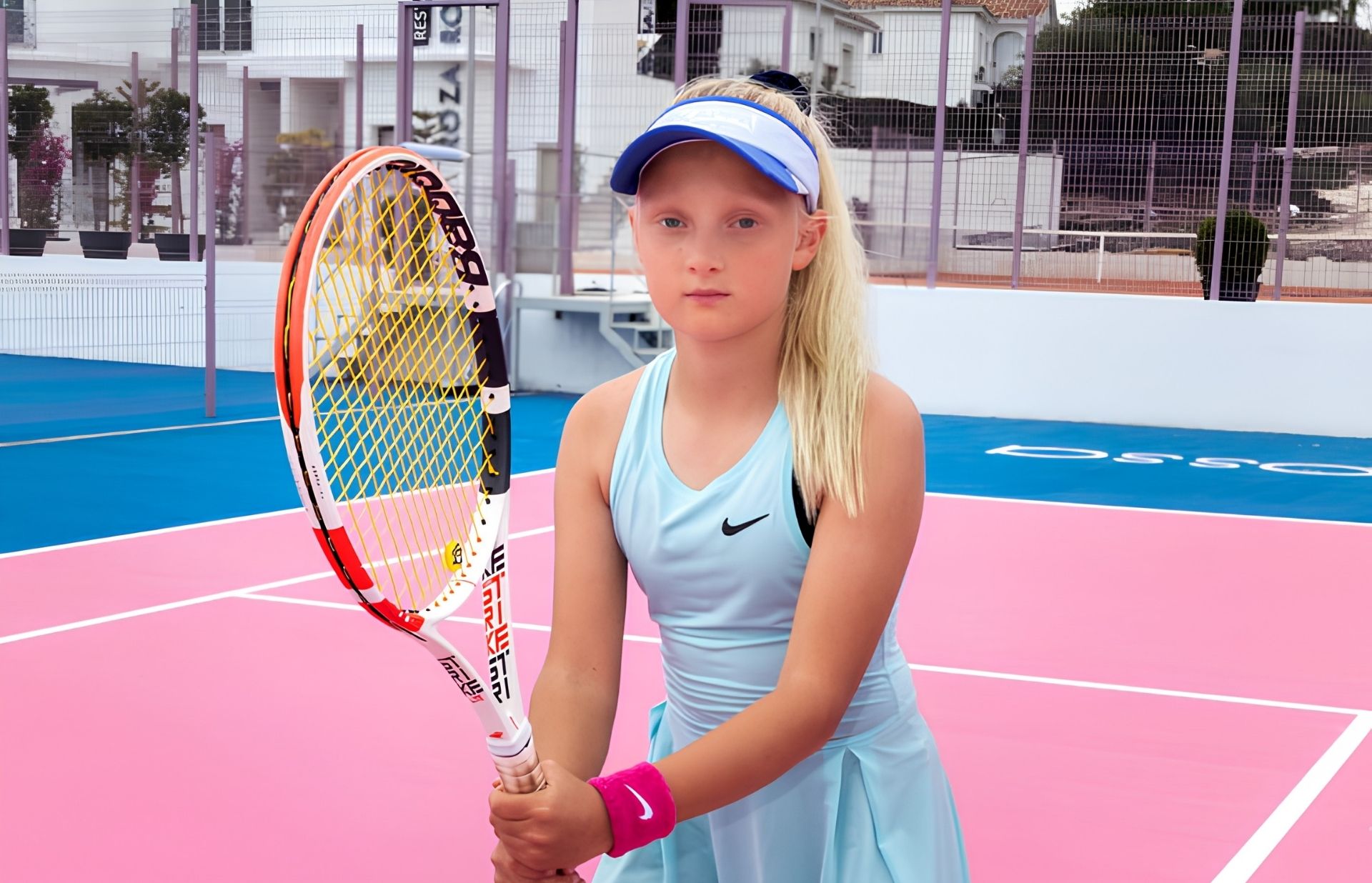
Tennis lessons for kids are much more than simple sports training; they represent a unique opportunity to develop motor skills, discipline and socialization in a healthy environment. If you're looking for the right place in Estepona or Marbella for your child to learn to play tennis, it's essential to understand which factors make the difference between a purely technical introduction and a well-rounded sporting experience. Why are tennis lessons ideal for children's development? Introducing tennis at an early age is an investment in children's overall growth. Beyond the racket and the ball, this sport acts as a driver of psychomotor development, notably improving hand-eye coordination and lateral agility, skills that are fundamental during the stages of greatest physical development. The nature of the game, which combines short bursts of high intensity with moments of pause, allows children to stay active without becoming overly fatigued, encouraging a natural and motivating learning curve. From a social standpoint, tennis lessons for kids are also a space where they learn to handle wins and losses, fostering empathy and respect for their opponent. In these early years, the focus should be on playful introduction: when the child experiences the session as a game rather than a technical obligation, their willingness to make an effort increases and their interest in the sport is sustained over the long term, creating a healthy habit that lasts well beyond childhood. Tennis academy in Estepona Choosing a tennis academy in Estepona like RozaRossa Academia de Tenis means looking at several factors beyond the courts: How are the groups chosen? Children's physical and cognitive maturity varies greatly from one age to another, which is why well-segmented groups allow the coach to adapt language and exercises to each stage. Within each age range, homogeneity in skill level also matters: a well-balanced group…
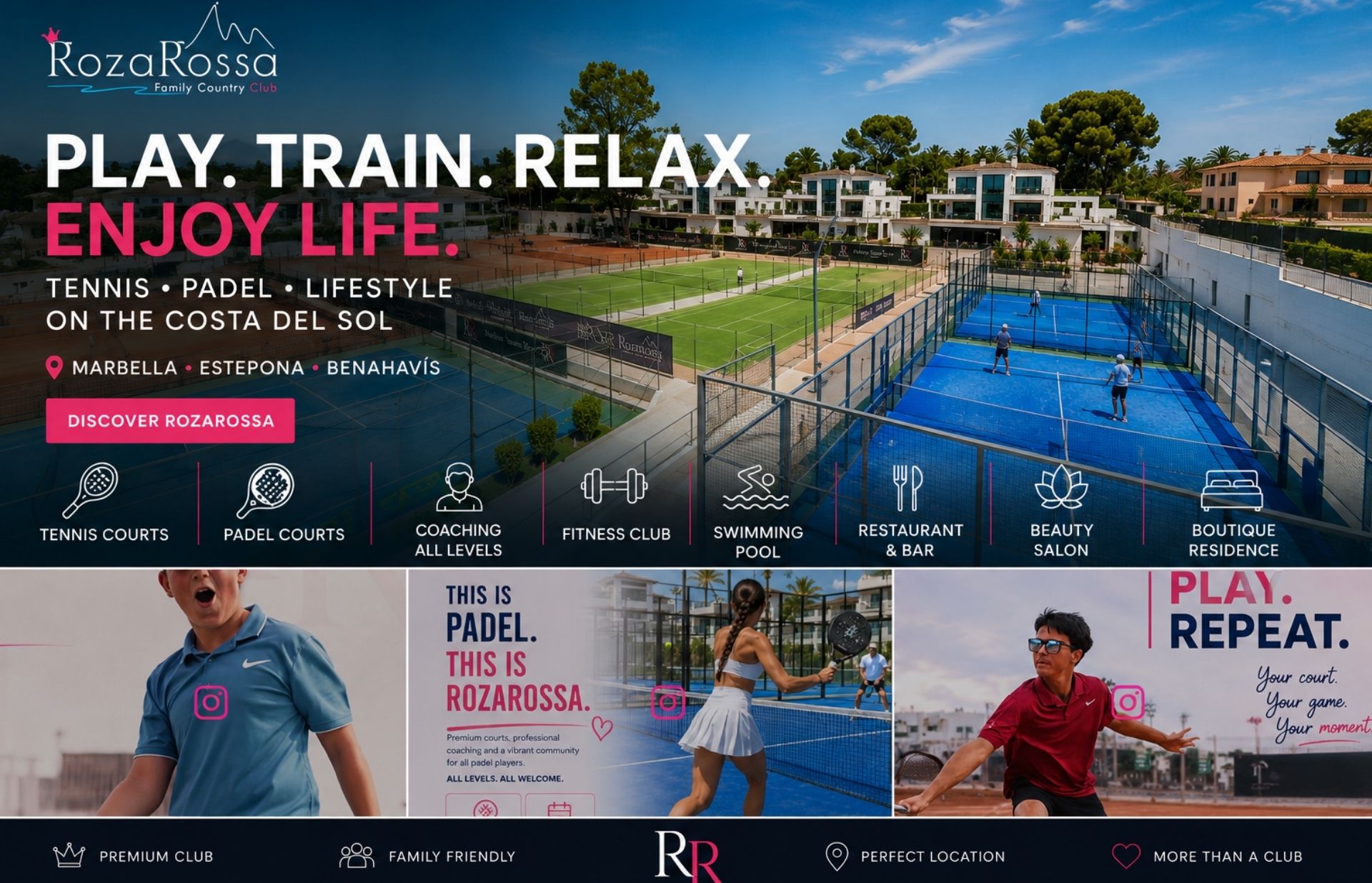
Sunshine, sport and the sea come together on the Costa del Sol, and few places capture that combination as fully as RozaRossa. Set between Marbella and Estepona, just a short drive from Benahavís, we bring together tennis, padel, fitness and wellness in one destination built for holidaymakers, residents and families alike. Whether you're staying in the area for a week or you call the Costa del Sol home, RozaRossa is designed for days that mix movement with relaxation: a morning on the court, an afternoon by the pool, and an evening that feels like part of the holiday itself. Tennis and padel for every level Sport sits at the heart of what we do. Our courts and coaching programmes are open to complete beginners and competitive players alike, with private lessons, group sessions and academy programmes for children and adults. Tennis in Marbella, Estepona and Benahavís Our professional coaches work with players of every level, from someone picking up a racket for the first time to those training for competition. Programmes include: Private and group tennis lessons A tennis academy for children and adults Family sessions where parents and children play together Intensive tennis camps for visitors looking to improve during a short stay Padel courts and coaching Padel is one of the fastest-growing sports in Spain, and it has a natural home at RozaRossa. Guests and members can: Rent a court by the hour Book private padel lessons Join group coaching sessions Take part in club tournaments Whether you're searching for padel in Marbella, Estepona or Benahavís, our courts and coaching staff are set up to welcome first-timers and regular players alike. Beyond the courts: Lifestyle, wellness and family Life at RozaRossa isn't limited to the courts. Around the sport, we've built a space where families can spend the…
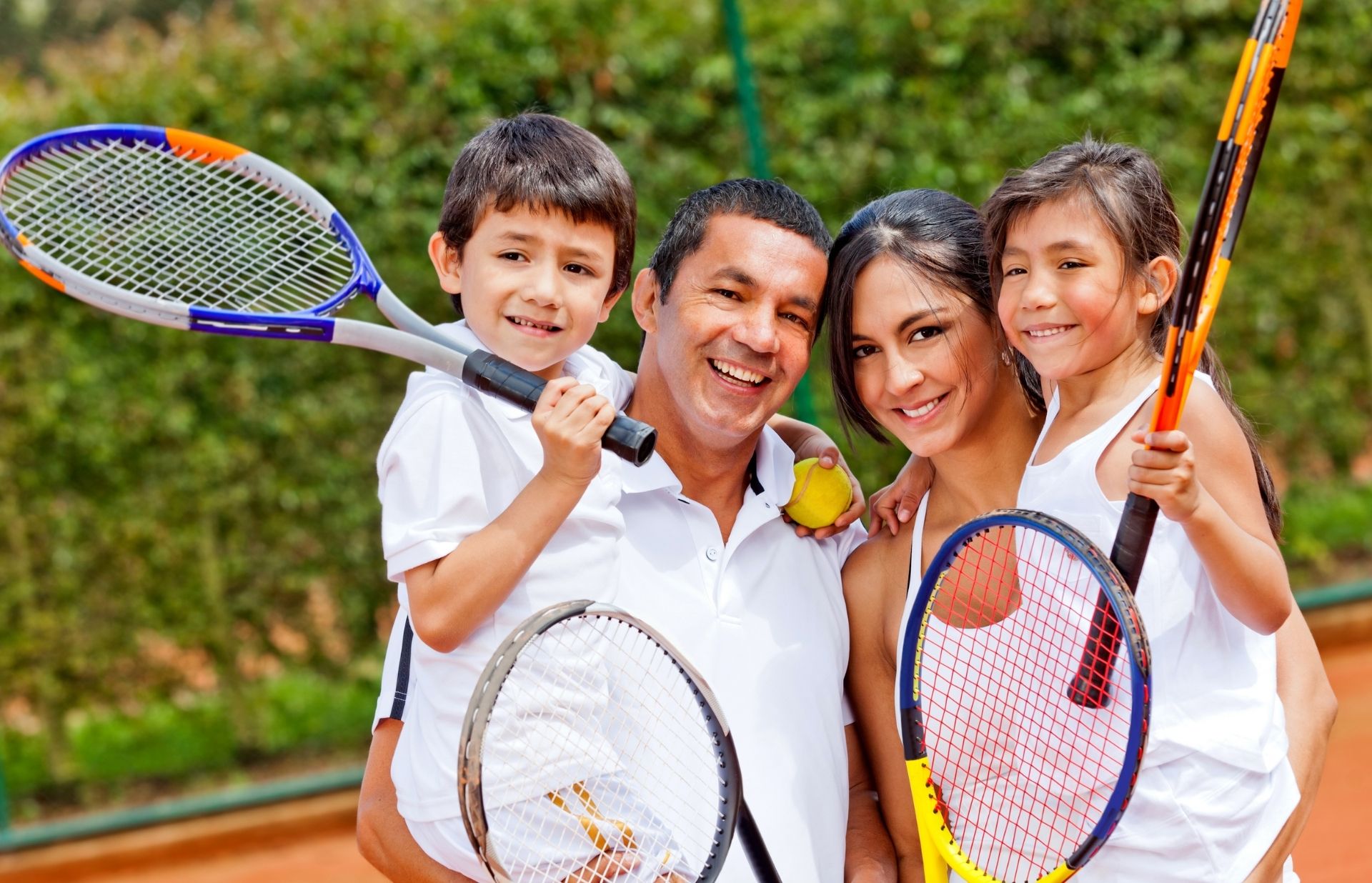
Many times, the challenge is not finding time to spend with the family, but finding a place where everyone can enjoy the outdoors together. At RozaRossa Tennis Academy, you can combine sports and leisure in one place, making it a great option for planning a different day out doing family activities in Estepona and Marbella. Would you like to know what activities you can enjoy at our centre? Keep reading! The importance of taking part in family activities Sharing activities as a family is a great way to strengthen relationships and break away from the daily routine. Between work, school and everyone's responsibilities, it is not always easy to find time to enjoy together. That is why spending a few hours doing a shared activity helps create lasting memories and make better use of your free time. When these activities take place outdoors, the benefits are even greater. Playing sports helps everyone stay active, take a break from screens and enjoy a different environment. You do not need previous experience or a high fitness level; the most important thing is finding an activity that everyone feels comfortable with and can enjoy. Another important point is that sport also teaches values such as effort, perseverance, respect and teamwork. When these experiences are shared as a family, children learn naturally while spending quality time with the adults. Different family activities in Estepona and Marbella If you are looking for ideas to enjoy a different day out, at RozaRossa we offer a variety of activities that combine sport, leisure and family time without the need to travel to different locations. Tennis lessons and court hire Tennis is the club's main activity and an excellent option for families. Whether you already play or want to start from scratch, you can book a court or…

Many padel players reach a point where they stop noticing improvements. They keep playing several matches a week, they have experience and know the rules well, but the same mistakes appear again and again on the court. It is common to think that the only way to keep progressing is to play more matches or spend more hours, when in reality the problem usually lies in the lack of specific training. From a certain level onwards, improving in this sport depends much more on working on specific aspects of the game in advanced padel lessons than on simply accumulating minutes of play without a clear objective. Advanced padel lessons When you already have a good level of padel, lessons remain just as important as at the beginning, although the goal changes. Instead of learning basic shots, training focuses on refining technique, correcting small details, and improving decision-making during matches. These are aspects that often go unnoticed but make the difference when the level between players is similar. In addition, a coach can detect mistakes that you may not notice yourself. It is common to repeat an incorrect movement for months without realising it or to always make the same decision in certain situations. Lessons allow you to analyse these situations and work on them with specific exercises, making progress much faster and more consistent. What will you learn in advanced padel lessons? When an advanced level is reached, training is no longer focused only on executing a shot correctly. What matters is knowing when to use each resource, how to anticipate the opponent, and how to maintain a consistent performance throughout the match. Improving strategy and reading the game One of the most worked aspects is the tactical side. You will learn to better interpret each point, identify opponents’ weaknesses,…

Professional tennis continues to evolve thanks to athletes who not only achieve top results on court but also dedicate themselves to developing the next generation of players. Mikhail Kukushkin — one of Kazakhstan's most recognized ATP Tour competitors, who recently announced his retirement from professional tennis in October 2026 at the Almaty Open — is launching his next chapter with the creation of Kukushkin Performance Academy, based at the RozaRossa tennis complex in Marbella, Spain. The academy is designed for young and developing athletes aiming to transition from junior tennis into the professional tour through a structured, high-performance approach, with preparation at Tennis Europe, ITF, ATP, and WTA levels. Kukushkin performance academy: A new standard in player development The academy focuses on comprehensive player development, covering individual on-court training, tactical and technical development, match psychology and mental preparation, physical and tennis-specific conditioning, preparation for Tennis Europe, ITF, ATP, and WTA tournaments, and season planning and tournament scheduling. Although the academy has only recently been announced, Kukushkin is already actively involved in supporting young players at RozaRossa. One example is Maria Parkhomenko, a leading player in her age category (under 11) in Spain, six-time Andalusia champion, and now transitioning to Tennis Europe-level competition. Last year, Maria signed a contract with global tennis brand HEAD and is also supported by sports agency Sparta, which manages her professional development pathway. Kukushkin has already evaluated her game, provided positive feedback, and continues to contribute to her development through advisory support. Her full training process is led by her personal coach, Nikolay Parkhomenko. RozaRossa: A complete high-performance training environment The academy is based at RozaRossa, one of Europe's most comprehensive tennis and sports performance centers, located in Marbella — a key destination for year-round professional training. RozaRossa is not only a tennis academy but a…

Starting in tennis or padel without guidance usually leads to the same point: the shots come out, but in an inconsistent way. One day you play well, the next not so much, and it’s hard to understand exactly what is going wrong. When this happens, it is normal to consider signing up for a tennis and padel academy, because the difference between playing and truly improving is having a clear training structure. Why should you sign up for a tennis and padel academy? Starting to play on your own can give the feeling that you improve quickly at the beginning. However, over time it is common to plateau: the same shots are repeated, mistakes appear that are not corrected, and it becomes hard to know what to do to keep improving. It is at this point that an academy provides an order that is difficult to achieve on your own. Learn with a solid foundation from the beginning When you start without a learning structure, it is easy to pick up movements or habits that later become very difficult to correct. An academy allows you to build a correct foundation from the start: posture, coordination, grip and movement. This not only helps you play better, it also makes the game more comfortable and stable. In addition, understanding why each movement is done is almost as important as doing it correctly, because it speeds up improvement in the medium term. Constant improvement with follow-up One of the most common problems when playing on your own is not being clear about whether you are really improving. In an academy, the work is organized progressively: first control, then accuracy, and later more advanced aspects such as power or tactics. This allows you to see real progress, even small ones, and stay motivated. It…

When booking a padel court, many people are surprised to see that time slots are usually organized in very specific time blocks. This is not a random decision, but a reference commonly used in clubs and sports centers to better organize court activity. In this article we answer the question of how long a padel match lasts. How long does a padel match last? The average duration of a padel match is usually between one hour and one and a half hours. In friendly matches or between amateur players, it is common for games to finish within this time range, especially when played as best of three sets. However, some matches may end sooner if one pair clearly dominates the game. Likewise, when the level between players is very similar and games are long, the duration can exceed 90 minutes and even approach two hours. In professional competitions there is also a wide variation. Although many matches last between 60 and 120 minutes, some particularly close matches can last much longer due to the number of games played and the intensity of each point. Phases a padel match is divided into Before analyzing timing, it is worth remembering that a padel match follows a very specific structure. Each of its phases directly influences the total duration of the match. Warm-up before the match starts Before starting, players perform a warm-up to prepare the body and become familiar with the court conditions. During these 5–10 minutes, groundstrokes, volleys, bandejas and serves are practiced. Although it is not part of the official competition time, it is an important phase because it helps prevent injuries and allows players to get into rhythm before the first game begins. In most tournaments and organized matches, warm-up usually lasts between five and ten minutes. Development of…
Our Instagram






Book a court, lesson with coach or enroll in fall groups

Book a court, lesson with coach or enroll in fall groups


