


The “RozaRossa” tennis academy, led by Nikolay Parkhomenko, continues its rapid development, strengthening its status as one of the most professional and promising international tennis training centers.
The project brings together ATP and WTA players, Tennis Europe and ITF juniors, as well as a large number of children and young athletes receiving structured professional development.
The people behind the system
“RozaRossa” is built around a remarkable convergence of talent:
Nikolay Parkhomenko
A key feature of the academy is the author’s system created by Nikolay Parkhomenko, combining personal involvement, international experience, a strong coaching team, and an individual approach to each athlete. The academy does not simply build training processes, it creates a full-scale sporting ecosystem for developing champions.
Parkhomenko is the central figure of the project, directly involved in shaping the training methodology, preparation strategy, and athlete development system. Special attention is given to the development of young athletes, including his daughter Maria Parkhomenko, for whom he personally shapes a professional pathway in world-class tennis.
Svetlana Germanovna Parkhomenko
A unique value of the project lies in the sporting dynasty of the Parkhomenko family. Nikolay’s mother, Svetlana Germanovna Parkhomenko, is a distinguished figure in world and Soviet tennis: a top-10 WTA player, Wimbledon semifinalist, ten-time USSR champion, and honored coach and athlete of Russia.
She played doubles with Larisa Savchenko, and together they reached the Wimbledon semifinals. This historical connection forms a unique foundation for “RozaRossa,” where sporting legacy, professional school, and family tradition merge into a unified system of champion development.
Larisa Savchenko

One of the key additions to the academy is Larisa Savchenko — one of the most decorated players in the history of women’s tennis. Her achievements include reaching world No. 1 in the WTA rankings, 15 Grand Slam finals, 6 Grand Slam titles, and more than 40 WTA Tour titles. She is also a ten-time USSR champion and honored coach of Russia.
Savchenko has worked with top-level players including Svetlana Kuznetsova, with whom she achieved victory at Roland Garros, and has been involved in national team programs and Fed Cup preparations. Her presence in “RozaRossa” significantly strengthens the academy’s methodology, expertise, and international coaching authority.
Mikhail Kukushkin

One of the most important directions of the academy’s work is the collaboration between Nikolay Parkhomenko and Mikhail Kukushkin — an experienced ATP professional who spent more than ten years in the world’s top 50. Their story began in childhood, competing together in junior tennis and developing within the same sporting environment. Today, this connection has evolved into a professional collaboration built on trust and a shared sporting philosophy.
As part of preparation for the Almaty Open in Kazakhstan, the training cycle covers individualized physical conditioning, tactical match modeling, adaptation to hard court surfaces, and recovery and workload management.
Maria Parkhomenko


Maria Parkhomenko competes in the 10–12 age category and is already among the leading young players in Spanish tennis. Her development is directly supervised by Nikolay Parkhomenko, and despite her young age, she demonstrates strong consistency in both national and international competitions.
Her recent achievements include second place at Tennis Europe in doubles, second place at the Andalusia Championship, second place at the Andalusia Team Championship, and seven Andalusia Cup titles. Maria has signed an international contract with HEAD and collaborates with the Sparta sports agency, which works with ATP and WTA players.
A world-class training hub
Today, “RozaRossa” serves as a major training hub for athletes of all levels. The coaching staff includes more than eight professional specialists: international tennis coaches, professional sparring partners, strength and conditioning coaches, specialized physical preparation coaches, and recovery and medical specialists.
The academy also regularly welcomes friends, partners, and international players who come to train in a professional high-performance environment.
Under the leadership of Nikolay Parkhomenko, “RozaRossa” continues to strengthen its position as one of the most comprehensive and forward-thinking tennis academies of its generation.
Latest news and events


The warm-up exercises for padel are the starting point of any well-planned session, whether you are playing for the first time or have been stepping onto the court for years. A routine lasting just a few minutes can completely change how your body responds during the match. Why is doing warm-up exercises vital for your body before stepping onto the court? Physical preparation before a match is the most effective barrier against sports injuries. In padel, explosive movements, torso rotations and sudden changes of direction place a lot of strain on the joints. A good warm-up raises body temperature and prepares the tissues to absorb impact and twisting, reducing the risk of suffering tears, sprains or overload. Joint mobility often…
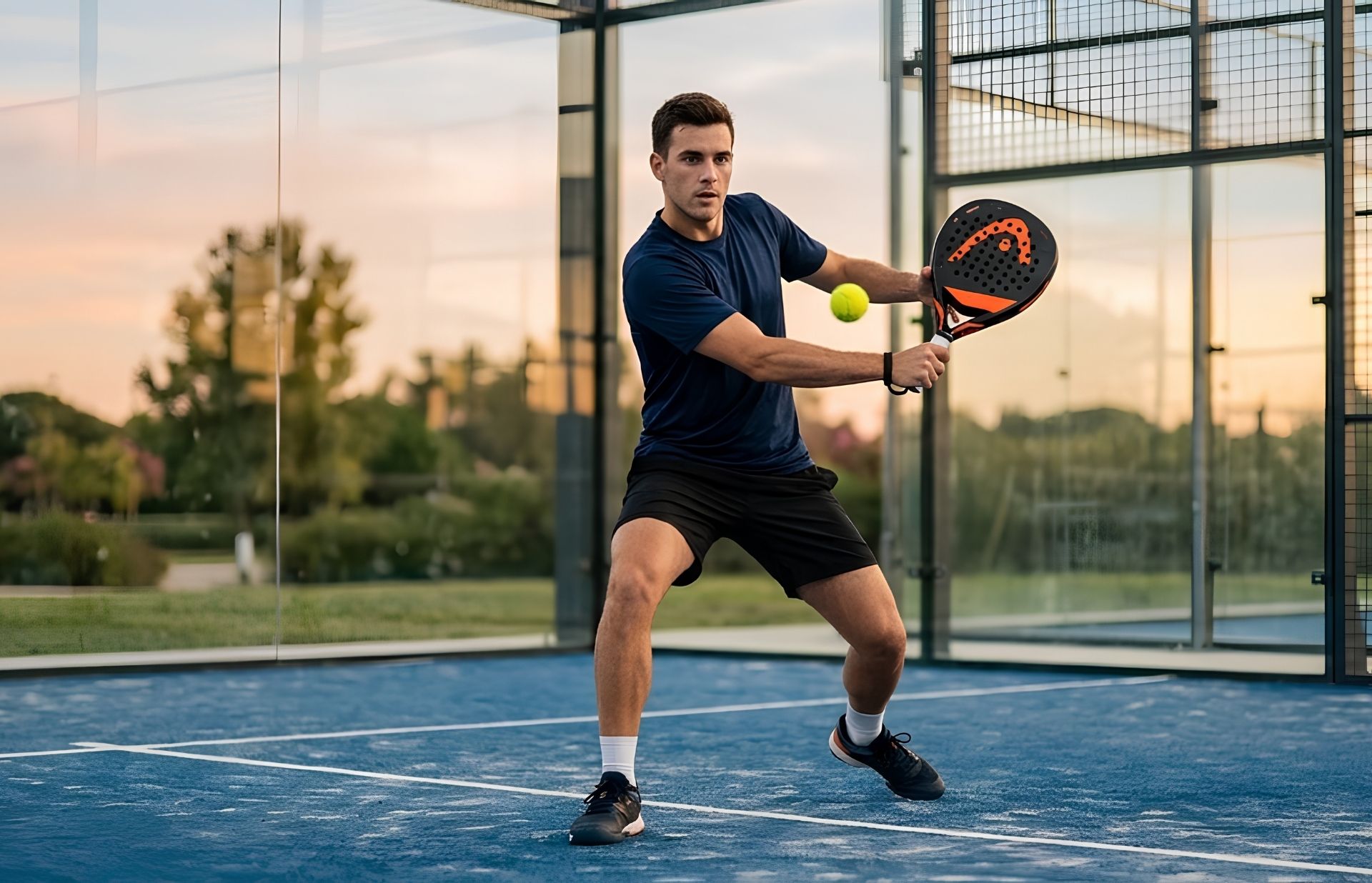
Learning to play padel seems simple at first: racket in hand, small court and soft ball. But the technique has more nuances than it may seem, and many players carry bad habits for years that slow down their progress. Detecting mistakes when learning padel technique in time is what allows you to stop getting stuck at the same level and start making the progress you are looking for. Mistakes when learning padel technique Most mistakes in padel do not come from a lack of strength or physical condition, but from gestures that have been incorrectly automated from the beginning. These are the most common ones: 1. Incorrect racket grip Many players hold the racket as if it were a tennis…
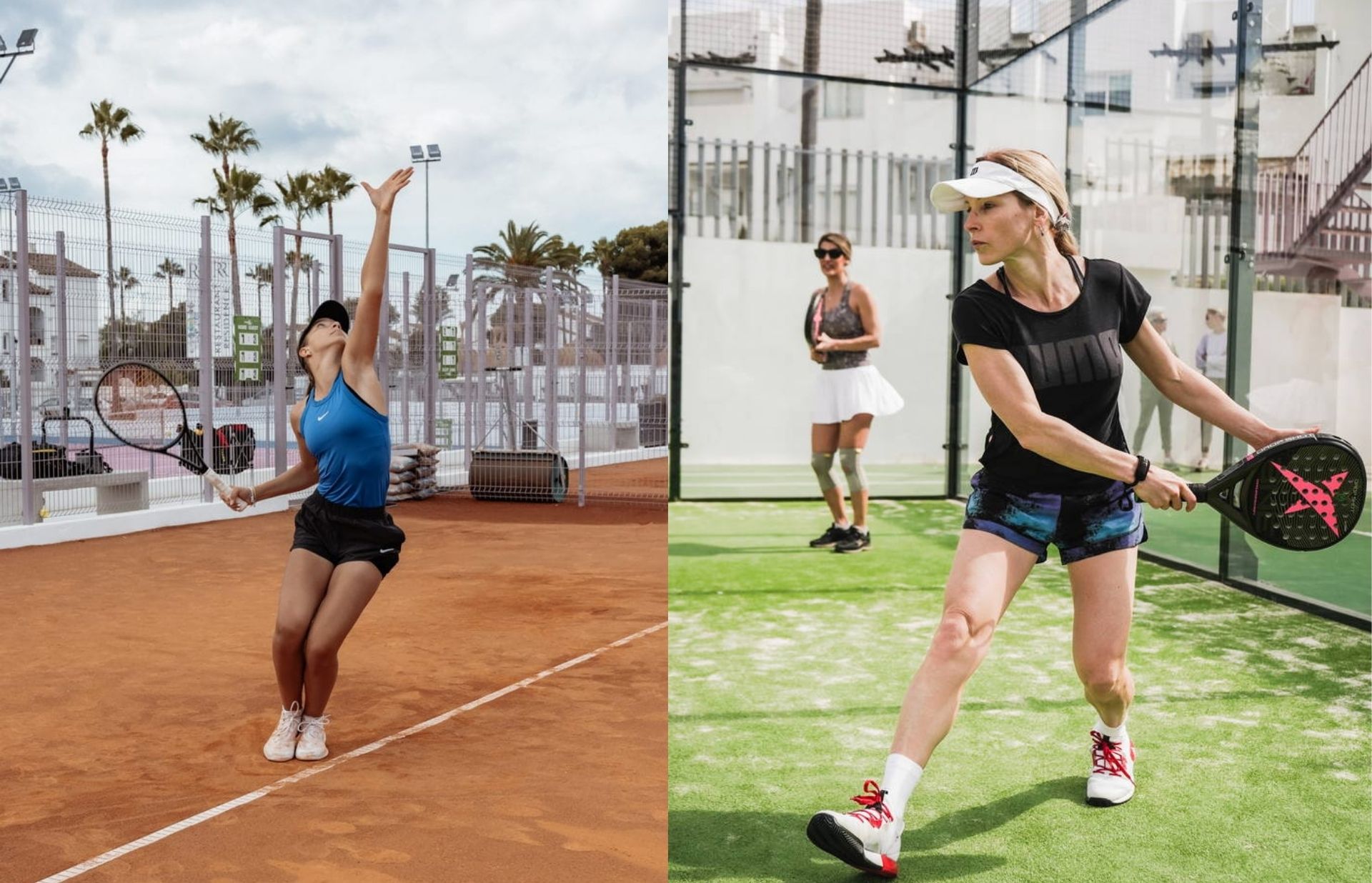
Choosing the right racket is a decision that directly affects both your performance on the court and the health of your joints. In both tennis and padel, the market offers a huge variety of options, which can be confusing if you do not know which factors to prioritise according to each player's profile. At RozaRossa Tennis Academy, today we want to share some tips to help you choose the right tennis or padel racket. Tips for choosing a tennis or padel racket Before looking at the brand or the latest popular model, there are several practical things you should consider to make the right choice. Be honest about your actual playing level It is very common to think we play…
Our Instagram





Book a court, lesson with coach or enroll in fall groups

Book a court, lesson with coach or enroll in fall groups


